Professional and local services
Explain the service, eligibility, operating area and enquiry process. Give visitors enough context before asking them to get in touch.
A business website explains who you are, what you provide, who you serve and how a potential customer can take the next step. It usually brings company information, service pages, relevant work and contact details into a connected set of pages.
The scope follows your audience and content. A small local business and a company selling several services to procurement teams need different levels of detail; an arbitrary page allowance is not a useful starting point.
Explain the service, eligibility, operating area and enquiry process. Give visitors enough context before asking them to get in touch.
Present capabilities, relevant projects, company information and contact routes for different buying needs.
Improve an existing site’s information, mobile experience or editing workflow while preserving useful URLs and identifying content that should be consolidated.
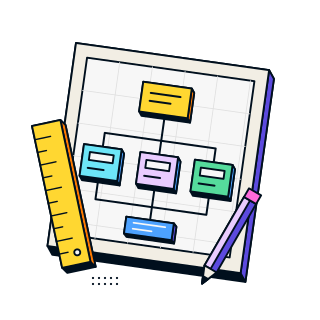
Define the sitemap, service-page relationships and content hierarchy. Give each important page a purpose rather than repeating the same message everywhere.
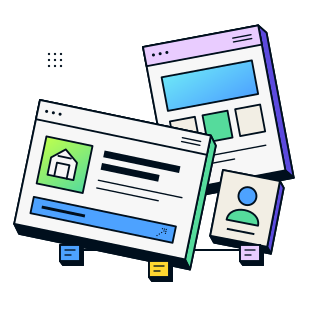
Create layouts, typography, components and responsive behaviour that fit your brand and make navigation and enquiries straightforward.
Choose editable pages, collections or fields around the updates your team will actually make. A CMS is included when agreed, not assumed for every build.
Build and test enquiry forms and agreed email, WhatsApp, map or CRM connections. Identify who receives each enquiry and how failures are handled.
Prepare distinct metadata, semantic headings, crawlable links, appropriate schema and indexing controls. Include redirect planning when replacing useful existing pages.
Provide the agreed website, editing guidance, launch checks and ownership/access information. Third-party licences and continuing support responsibilities are documented.
For an Ahmedabad business, accurate contact details and genuine service-area information help visitors assess whether you are relevant. For a business serving Gujarat or India more widely, the website should explain that reach without copying the same page for every city.
We plan headings, internal links and important public content during the build. A separate SEO scope can add deeper competitor research, existing-search analysis, content priorities and ongoing measurement.
A content-led site can use a straightforward HTML, CSS and JavaScript build or a suitable CMS-backed structure. More interactive requirements may need an application framework and server-side functionality. We discuss the tradeoff between editing convenience, dependencies and maintenance before selecting the approach.
For a redesign, we inventory existing pages, forms and integrations first. Redirects, analytics continuity and the content your team relies on are part of the migration discussion.
Identify audiences, business goals, existing pages and who will prepare and approve content.
Agree the page relationships and responsive layouts using representative real content.
Build reusable page structures and the agreed CMS, form and external connections.
Review metadata, links, mobile journeys, form delivery and any old-to-new URL mapping.
Confirm approvals, access and ongoing responsibilities before a controlled launch.
Spreebuzz brings entertainment services, artists and collaboration enquiries into one business website. Theka Coffee separates consumer product exploration from distributor enquiries. Both show a practical starting point for a company website: organise information around the people who need it and give each audience an appropriate next step.
A focused business website can start with a homepage, clearly described services, relevant work and a contact route. The right number of pages depends on the questions customers need answered, not a standard package size.
Agree who prepares the copy and imagery, which information your team must edit, where enquiries arrive and what happens after launch. Custom booking, payments, additional languages and ongoing content updates should be considered separately.
Before development, define the journeys you will review at handover. For a service business, that might mean a visitor can find the relevant service on mobile, read a related project and submit an enquiry that reaches the right inbox. If editing is included, your team should also be able to update the agreed content.
For a replacement website, include a page inventory and a decision for important existing URLs. The proposal should identify content preparation, form connections, migration checks, access handover and any ongoing support separately, so completion can be reviewed against a shared checklist.
Peak Web Craft is based in Ahmedabad and led by Nisarg Patel. Project discussions and reviews can happen online, so the brief and approval process can work for clients across India and remotely.
We begin by clarifying your audience, content and enquiry process. Agree review responsibilities and any meeting arrangements during the project discussion; we do not assume an office visit is needed.
Yes. We start with the existing pages, content, integrations and problems to solve. Useful URLs and search entry points should be considered before replacing the design.
Yes, when an editable CMS or content workflow is included. We define the editable areas and provide guidance; custom features may still require development.
We agree this in the brief. You approve business facts and provide assets you have permission to use. Content planning or writing can be included in the scope rather than assumed.
The build includes the agreed technical and on-page foundations. Continued research, content optimisation and reporting are a separate SEO scope with their own priorities.
It can, but those requirements affect the service and scope. A store, scheduling journey or more complex workflow may be better handled through our ecommerce, booking or custom application service.
Yes. We work with businesses across Gujarat and India and collaborate remotely. Project discussions, design reviews and handover can be arranged online.
The main factors are page types, content readiness, custom design, editing tools, integrations and migration. We agree review milestones and who supplies and approves the material. Share a target date and budget range so the proposal can separate essentials from later additions.
Most service businesses need a homepage, a page for each distinct service, project or case-study pages, an about page, a contact page with an enquiry form, and privacy information. Add FAQs, resources or location information when customers genuinely need them. We agree the page list in the proposal.
A CMS suits teams that update services, projects or articles regularly. A static build can be faster and simpler to secure when content changes rarely. We recommend the approach after agreeing who edits what, how often and with which approvals.