
Shopify & Ecommerce
Shopify vs Custom Ecommerce Website: How Indian Brands Should Decide
Compare Shopify and custom ecommerce around your catalogue, buying journey, Indian payment needs and the work your team must manage after launch.
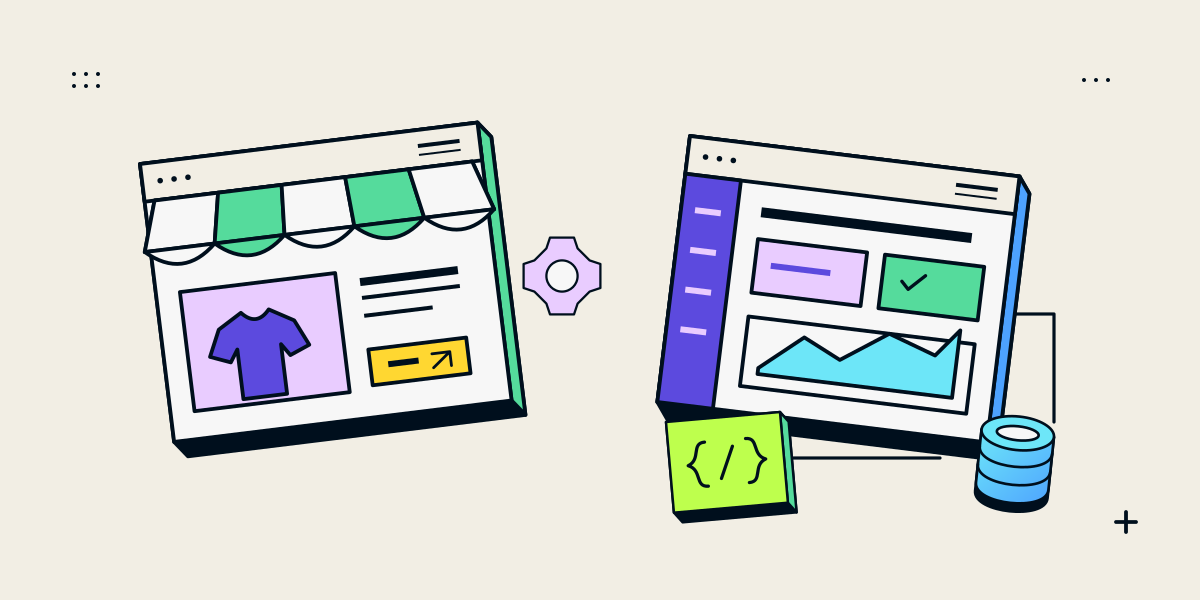
Start with the workflow you need to run
For an Indian brand comparing Shopify vs a custom ecommerce website, the first question is whether the selling and operating model fits a managed commerce platform. Shopify is worth considering when the catalogue, checkout and administration can work within its supported capabilities. Custom development deserves investigation when essential workflows cannot be handled cleanly by a suitable existing platform.
A distinctive visual design is not, on its own, a reason to build a commerce backend from scratch. Conversely, forcing a complex operating process into a collection of fragile storefront workarounds is not a reliable shortcut. Define the requirements before comparing technology names.
Be clear about what “custom” means
A custom Shopify theme, a custom storefront using an existing commerce backend and a fully custom commerce application are different scopes. They can look equally distinctive to the customer while leaving very different work for the development team. Ask which parts are being designed, which are being configured and which must be built and maintained.
Shopify theme customisation can use editor settings or code, depending on the theme and required changes. Shopify’s theme guidance explains that distinction. Theme freedom does not mean every checkout or platform behaviour can be changed.
| Area | Shopify-based store | Custom commerce approach |
|---|---|---|
| Commerce administration | Uses Shopify’s available administration and platform rules | Uses a chosen backend or requires custom administrative tools |
| Storefront design | Theme configuration, custom sections or a custom theme | A separately designed interface with its own implementation scope |
| Unusual workflows | Evaluate supported features, apps and integrations first | Can be designed explicitly, with development and support obligations |
| Operations | Merchant manages configuration, content and connected tools | Responsibilities for infrastructure and application operations must be assigned |
| Future changes | Constrained by platform, theme and app capabilities | Constrained by the quality, budget and maintainability of the implementation |
Check the requirements that matter for an Indian store
Payments and refunds
Write down the payment methods your customers need and verify provider eligibility for your business and chosen platform. At the time of writing, India is not listed among Shopify Payments supported countries. Check the current list and available third-party options before choosing a plan or integration.
Account for the payment provider’s charges and any applicable platform transaction fees separately. Shopify’s third-party payment provider documentation explains its fee considerations. Confirm current rates directly; the development quote alone is not the store’s total operating cost.
Invoicing and business records
Ask your accountant which GST and invoice details your business must capture, and turn those approved requirements into an implementation checklist. Identify which system produces the invoice and how refunds, cancellations and accounting exports will be reconciled. A theme label is not a substitute for a verified invoicing process.
Delivery and customer support
Define serviceable locations, shipping rules, unavailable items and the process for failed deliveries. If you need cash on delivery, confirm how it will be enabled, confirmed and reconciled. If WhatsApp is part of support, make sure staff receive the product or order context they need without making messaging the only usable contact route.
Catalogue and language
Test your actual product types: sizes, made-to-order options, bundles, spare parts or enquiry-only items. Specify any required languages and who will maintain translations. The question is whether the complete product journey works, including administration, rather than whether one attractive product page can be mocked up.
When Shopify is a sensible starting point
Shopify can be a practical choice when the team wants a managed commerce system and its requirements fit the available store workflows. Examples include a straightforward product catalogue with a conventional checkout, or a brand whose main customisation needs concern presentation, browsing and selected integrations.
Check whether a well-chosen theme already provides the structure you need before commissioning a complete theme build. A small number of purposeful custom sections can be easier to maintain than replacing every standard control. Include the merchant’s editing experience in the review, especially if collections and campaigns change regularly.
Our Nidhi Halani project demonstrates custom Liquid storefront work with collection browsing and product-specific consultation enquiries. It shows that a distinctive couture presentation can sit within Shopify. It does not establish that Shopify will fit every brand’s operations.
For that particular buying pattern, read how to plan Shopify price-on-request products before deciding that every item needs the same checkout action.
When custom ecommerce deserves a closer look
Custom work is worth assessing when a requirement is central to the business and cannot be met cleanly by the platforms under consideration. Examples might include a specialised configuration process, approval-led purchasing or a tightly coupled internal workflow. These are reasons to investigate feasibility, not proof that a fully custom backend is necessary.
First ask whether an established commerce system with a focused integration can solve the problem. If a custom application is still the better fit, include the less visible work: permissions, order state changes, admin screens, failed integrations, backups, monitoring and recovery. The customer-facing pages are only part of the system.
- Who maintains the application and its dependencies after launch?
- Who responds when a payment event or fulfilment connection fails?
- How are changes tested without risking live orders?
- Can another developer understand the code and deployment process?
- How will the business export its records or migrate later?
Custom ownership is valuable when it supports a real requirement and comes with a sustainable operating plan. Without that plan, flexibility can turn into dependence on a single developer.
Compare total cost and prove the difficult workflow
Ask both approaches to cover the same scope over an agreed planning period. Include initial design and development, subscriptions, hosting where applicable, apps, provider charges, content work, maintenance and future changes. Mark estimates and assumptions explicitly. Avoid comparing a bare platform subscription with the full delivery cost of a custom build.
- Describe three representative customer journeys and three routine staff tasks.
- List the required systems and identify which operations each integration must support.
- Separate essential launch requirements from useful later improvements.
- Ask each supplier to demonstrate the hardest workflow with representative data.
- Compare delivery, recurring costs, support and exit arrangements on the same basis.
A prototype of a difficult quotation or product configuration flow can reveal more than a long feature checklist. Include error cases in the demonstration: an unavailable option, a cancelled payment and a repeated submission. Before launch, use the platform and provider’s supported testing process; Shopify provides test-order guidance for its checkout.
Questions about choosing an ecommerce platform
Is Shopify always cheaper than custom ecommerce?
No. The comparison depends on development scope, recurring tools, transaction arrangements and ongoing support. Compare the same workflows and planning period rather than one headline fee.
Will a custom site automatically be faster or rank better?
No. Either approach can be implemented well or poorly. Content, image delivery, scripts, navigation and the actual user experience need assessment on the finished site.
Can an enquiry-led catalogue still use Shopify?
It can, where the storefront and staff workflow are planned appropriately. Some businesses need product enquiries; others need quotation records, approvals or more complex integrations. Establish those differences first.
Can we migrate later?
A move may be possible, but products, customer records, order history, URLs and integrations need individual review. Agree export and migration responsibilities before you depend on a particular setup.