
B. Portfolio websites
Design Studio Portfolio Website: Show the Work and the Process
Structure a design studio portfolio website around project briefs, decisions, collaborators, deliverables, studio services and a clear enquiry route.
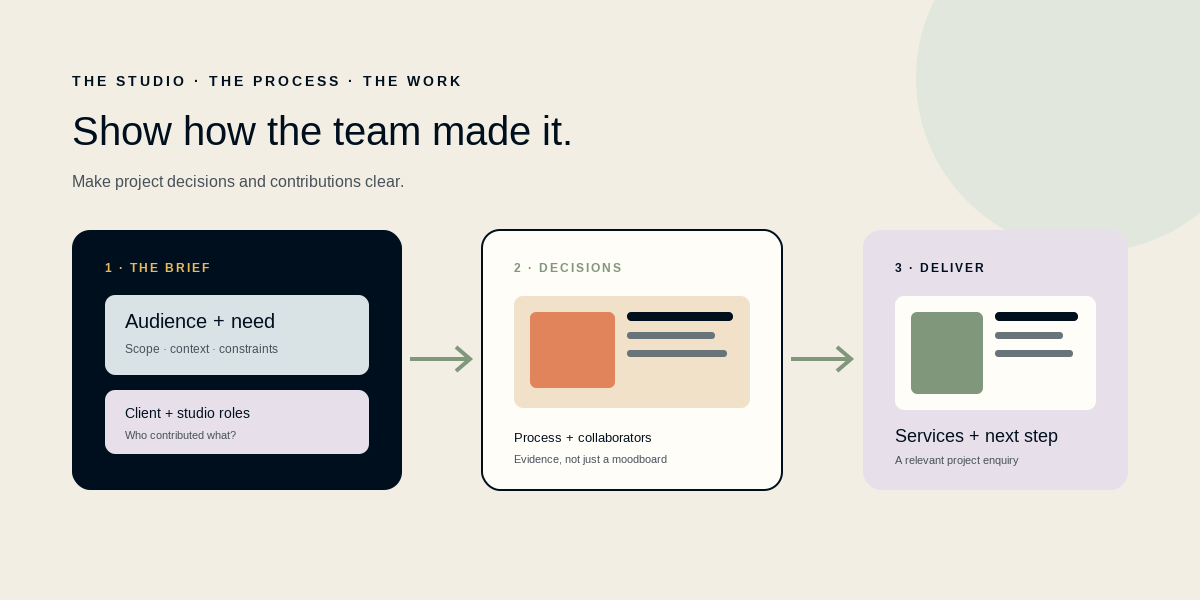
A design studio portfolio website should explain how the team approaches projects, not only display finished work. A prospective client needs to see what the brief involved, how the studio contributed, which collaborators were part of the work and what was delivered. Structure case studies around that evidence, then connect them to the studio's services and a suitable project enquiry.
TL;DR
- Curate projects that show the capabilities and project types the studio wants to take on.
- Give each case study a brief, role, process, collaborators and deliverables where permitted.
- Show how individual disciplines work together without overstating the team's contribution.
- Make studio services and project enquiry routes easy to find from relevant work.
Describe the studio's practice and project fit
Begin with a short explanation of what the studio does, the clients or sectors it serves and the type of project it can support. A multidisciplinary team may have several capabilities, but a long service list without context does not tell a visitor how those skills come together. Use the portfolio and service descriptions to show the relationship between the work and the offering.
- Name the studio's core disciplines and how they are combined on projects.
- Describe the client or project type that best fits the team's experience.
- State whether the studio collaborates with external specialists or partner teams.
- Link services to relevant case studies rather than repeating a generic studio pitch.
- Keep team biographies, locations and availability accurate and current.
This guide is for a studio showing work delivered by a team. An individual designer's portfolio can emphasize personal experience, role and selected work in a different way.
Select case studies that demonstrate distinct capabilities
Choose projects that help a prospective client understand the range and depth of the studio's work. A case study should add something beyond a logo or image: a different problem, process, discipline, audience or deliverable. If several projects demonstrate the same capability, prioritize the strongest and most current example rather than publishing near-duplicates.
| Question | What it clarifies |
|---|---|
| What capability does this project show? | Whether the example supports a service the studio currently offers. |
| What did the client need? | The project context and why the work took the direction it did. |
| Who contributed? | The studio's role and the responsibilities of partners or client teams. |
| What can be published? | Permission for client details, visuals, results and collaborator credits. |
| How does this project differ from others? | Whether it adds a new audience, process, service or kind of deliverable. |
Structure each case study around the brief and decisions
A design studio case study does not need to expose every internal document. It should provide enough context to make the work understandable: the brief or opportunity, the studio's scope, key decisions, collaborators and final deliverables. Use evidence that is approved and supportable; do not turn an unverified performance claim into a project outcome.
- Introduce the client or project at the level approved for publication.
- Explain the brief, audience or challenge that shaped the work.
- Identify which disciplines and people were involved and what the studio did.
- Show selected decisions or process stages that explain the final direction.
- Present deliverables with captions and context rather than a sequence of unlabeled images.
- End with a relevant studio service or a clear project conversation route.
For an individual practitioner rather than a team, see the guide to a personal portfolio website.
Make team roles and collaboration clear
Clients may be evaluating the team's ability to work across disciplines. Explain which roles the studio covered, what the client supplied or approved and when specialist partners contributed. A multi-disciplinary result is stronger evidence when visitors can understand how the parts fit together.
| Detail | How it supports the case study |
|---|---|
| Project team | Names or disciplines involved, shared only with permission. |
| Scope | What the studio agreed to deliver and what sat with the client or other providers. |
| Process | Reviews or decision points that explain how the project moved forward. |
| Collaboration | How external specialists, suppliers or in-house client teams contributed. |
| Handover | What the client received and any ongoing responsibilities clearly agreed. |
Avoid presenting every project as a full-service engagement if the studio provided only one part of the work. Accurate scope helps prospective clients assess whether the studio is right for a similar brief.
Connect portfolio proof to the next business conversation
A portfolio visitor may want to discuss a project similar to the case study they just read. Place a relevant next step near that work and make the destination clear. The enquiry can ask for a short brief, goals and timeline without requiring the visitor to fill out an exhaustive project specification before a first discussion.
- Link each case study to the studio service or discipline it demonstrates.
- State the type of project the studio is open to discussing.
- Use a contact form with clear labels and a visible confirmation state.
- Tell visitors who receives an enquiry and what response to expect.
- Use a separate process for press, jobs, partnerships or supplier contacts if the studio needs one.
Peak Web Craft's portfolio website development service supports curated projects, case-study layouts, responsive media and enquiry routes in an agreed scope. The existing portfolio examples for creatives compares how different media can shape portfolio structure.
Frequently asked questions
What should a design studio portfolio website include?
Include a clear studio introduction, selected projects with context, services or capabilities, team and collaborator information where useful, and a straightforward project enquiry route.
How should a design studio write portfolio case studies?
Explain the client brief, studio scope, key decisions, team roles, process and deliverables. Include results only when they are supportable and permitted for publication.
How many projects should a design studio show?
There is no fixed number. Choose enough relevant, distinct projects to demonstrate the studio's current capabilities without diluting the presentation with repetitive or outdated work.
Should a studio portfolio include process work?
Selected process work can explain how the team approached a brief and made decisions. Add captions and context, and publish only material approved by the client and collaborators.
How is a studio portfolio different from an individual designer's portfolio?
A studio portfolio should clarify team capabilities, disciplines and shared project delivery. An individual portfolio should make the person's own role and experience especially clear.