
Portfolio Websites
Fine Artist Websites: How to Show and Sell Your Work Online
Plan an artist website that presents artwork with context and makes a clear choice between enquiries, studio visits and online sales.

An artist website can be a gallery, an archive and a route to enquire
An artist website gives people a stable place to explore selected work, learn about the practice and find out how to view or acquire pieces. The site can support exhibitions, commissions, studio enquiries or direct sales, but those are different journeys. Choose the action that matches how the work is actually offered and make the terms clear.
The site should give each artwork enough information to be understood without turning every page into a catalogue specification. What to include depends on the medium, whether the work is available and what information the artist is comfortable publishing.
Present work with context, consistency and permission
- Curate galleries by series, medium, year or exhibition when those groupings help a visitor.
- Provide accurate titles and relevant details such as medium, dimensions or date when appropriate.
- Use consistent photography or scans that show the work clearly without misrepresenting colour or scale.
- Mark availability accurately and update it when a work is sold, reserved or no longer offered.
- Check reproduction rights, image credits and permissions before publishing.
A caption can explain the series, material or process in a few useful lines. Keep it focused on the work and avoid inventing interpretation or provenance that the artist has not supplied.
Choose between a portfolio enquiry and an online shop
| Route | Works well when | Information to make clear |
|---|---|---|
| Enquiry | Each sale or commission needs a conversation | How to ask, what details to include and how availability is confirmed |
| Studio or exhibition visit | The experience is in person or tied to scheduled dates | Location, access, timing and how a visit is arranged |
| Direct checkout | The piece has a defined price, availability and delivery process | Dimensions, condition, shipping, payment and what happens after purchase |
| Mixed catalogue | Some works are ready to buy and others need consultation | Which action applies to each item and how the artist follows up |
A shopping cart is not necessary just because the site displays artwork. If you do sell online, plan stock status, packaging, shipping, customer support and refunds alongside checkout. Our guide to ecommerce requirements beyond a cart covers the operating decisions a store needs.
Keep navigation and image presentation calm and usable
A simple artist site may need only work, about, exhibitions or news, and contact. Add a shop when there is a maintained collection of purchasable works; add separate project pages when a series or exhibition needs more context. The Dharmistha Suthar portfolio case study describes a gallery-led fine-art website connected to Dhoon Studio.
- Use meaningful page titles and links rather than image filenames as navigation.
- Provide text alternatives for images that communicate useful information.
- Keep gallery controls labelled and operable by keyboard.
- Optimise image sizes while preserving enough detail for the work to be viewed.
- Check colour, text size and contrast on phones and larger screens.
Plan how the artist will maintain the site after launch
- Decide who adds new work, exhibition details and availability updates.
- Choose a repeatable image preparation and caption workflow.
- Keep domain, hosting, shop and analytics accounts under appropriate owner control.
- Test enquiry notifications or purchase fulfilment before publishing a new collection.
- Review outdated work, links and event information on a regular schedule.
A portfolio is most useful when it remains accurate. Agree on a manageable update process before selecting a complex content system or adding features the artist will not maintain.
The Dharmistha Suthar case study combines artwork browsing with a Dhoon Studio showcase. An artist with a similar brief can decide which work belongs to a collection and which content explains the studio practice. This is evidence of portfolio presentation, not evidence of checkout sales; online selling requires its own operational scope.
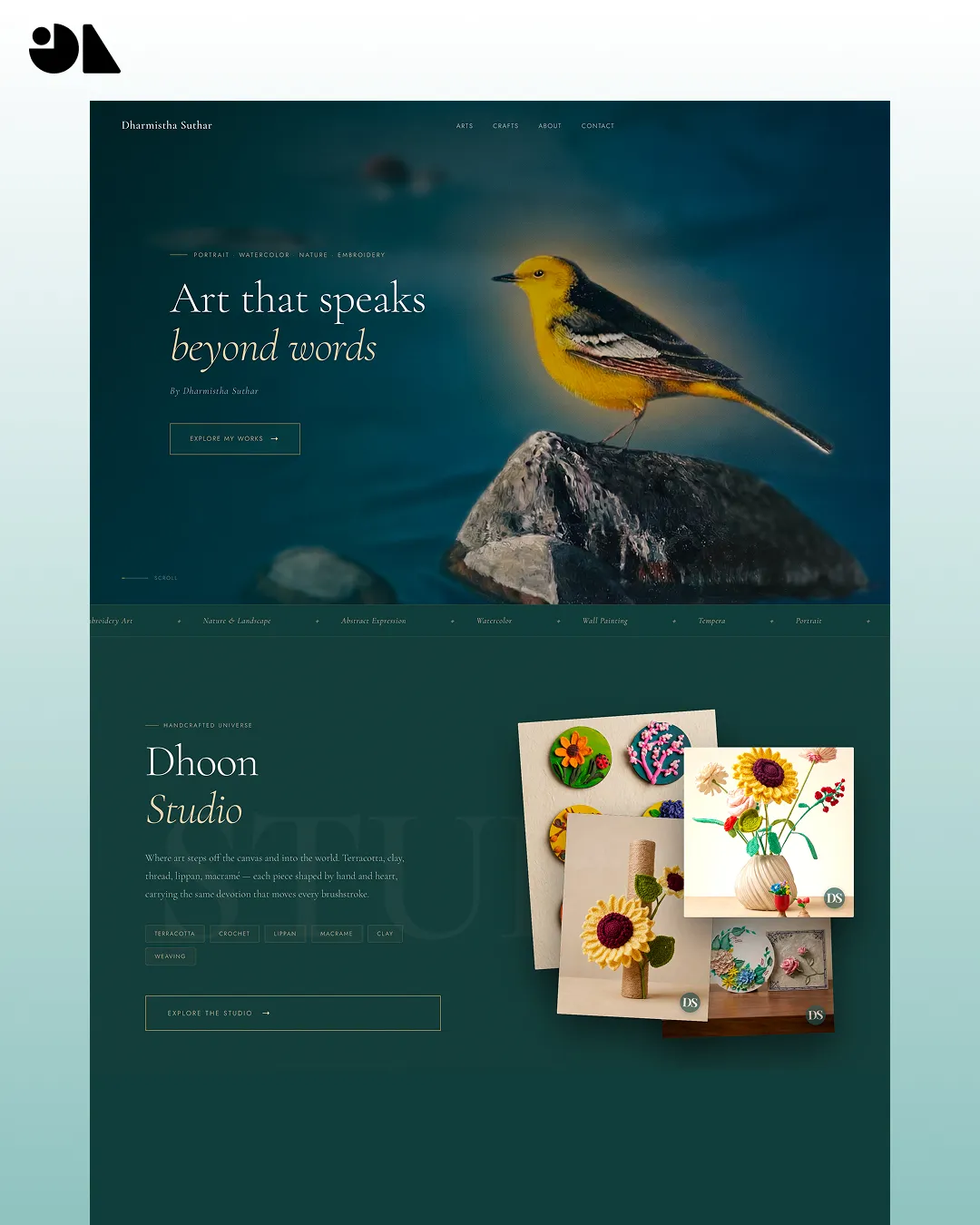
If you are preparing a build, our artist website design page explains the content inputs, example work and scope to discuss.
Questions about artist websites and selling work online
Does an artist need a website if they use Instagram?
A social profile can help people discover and follow an artist. A website offers a curated home for work, context, contact details and, if needed, a sales journey that the artist can organise around their practice. The two can work together.
Should I sell original work and prints in one store?
That depends on availability, fulfilment and how customers distinguish them. Keep product details and stock rules clear so buyers know exactly what they are purchasing.
What details should an artwork page include?
Use the information that helps people understand and consider the work, such as title, medium, dimensions, year, series and availability where relevant. Do not publish details you cannot verify.
Can I take commissions through the website?
Yes. Explain the type of commission, what information you need, the initial discussion and whether a request is an enquiry rather than a confirmed order.
Do I need ecommerce functionality for a portfolio?
Only when customers can complete a defined purchase and the artist can manage inventory, payment, delivery and support. An enquiry route is often more suitable for unique or made-to-order work.