
01
Collections and archives
Group work into meaningful collections and decide what remains visible after a piece is no longer available. Use context to explain the relationship between works.
An artist website may introduce a practice, document a body of work or help collectors enquire about a piece. These are different tasks. Agree what a visitor should understand about the work and which details belong beside each image.
Title, medium, dimensions, year and collection can provide useful context where accurate and relevant. Decide how to mark available or archived work without making an unsupported promise about stock or pricing.
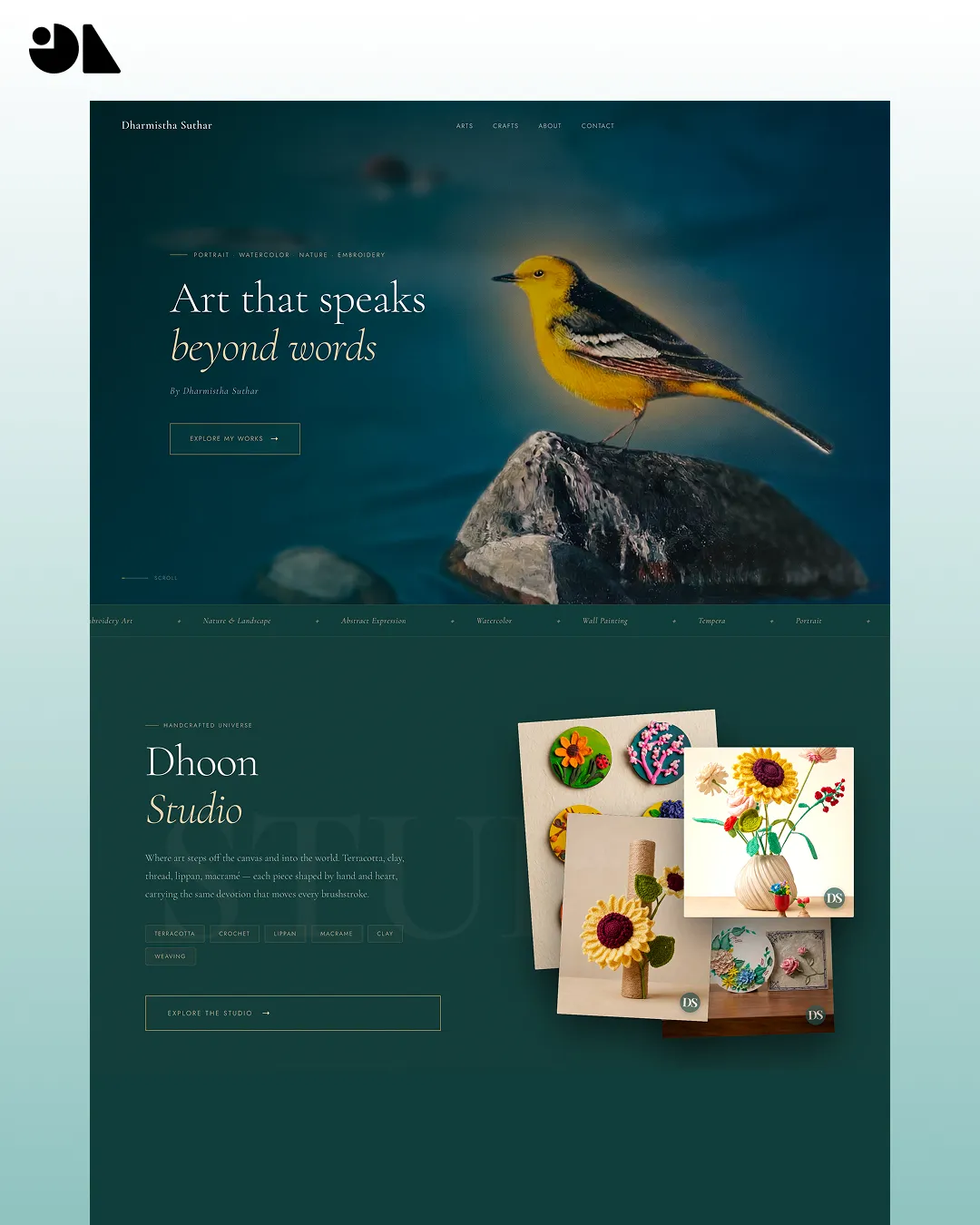
The Dharmistha Suthar project brings artwork browsing, gallery-led layouts and a Dhoon Studio showcase into one presence. The case study provides context for the portfolio and selected implementation work.
This example demonstrates presentation and browsing. It is not evidence of checkout sales or measured commercial results; an online shop would need its own product and fulfilment requirements.
Group work into meaningful collections and decide what remains visible after a piece is no longer available. Use context to explain the relationship between works.
Prepare approved images and accurate details. Review cropping, image sequences and mobile layouts so the presentation respects the work.
Let a visitor refer to the relevant piece or commission request. Decide who receives the message and what information is useful for a reply.
If availability, shipping or a commission needs discussion, make that enquiry route explicit. A clear contact action can be more suitable than implying that every work can be purchased immediately.
If you want checkout, discuss product data, payment, delivery, returns and stock responsibilities as ecommerce requirements. A portfolio proposal should not silently take on those operational commitments.
Agree who supplies artwork text, who approves images and who updates availability or new collections. CMS controls and training can be scoped around the way you work, with account ownership documented at handover.
Prepare an approved selection rather than the entire archive for the first review. Include permissions for collaborations, exhibition photographs and third-party material. Review the site on a small screen and confirm that enquiries carry enough context to be answered.
Yes. An archive or practice-led portfolio can present work without prices or checkout. Its purpose and contact route should be clear.
Yes, when navigation explains the relationship. The Dharmistha Suthar case study includes artwork presentation and Dhoon Studio in one online presence.
We can discuss the requirements separately. Payment, product data, fulfilment and support responsibilities need to be defined before a portfolio becomes a transactional store.