
C. Shopify and ecommerce
Ecommerce Website Cost in India: Scope Drivers Beyond the Platform
Understand ecommerce website cost in India by comparing catalogue, design, content, integrations, migration, testing and merchant operations in each proposal.
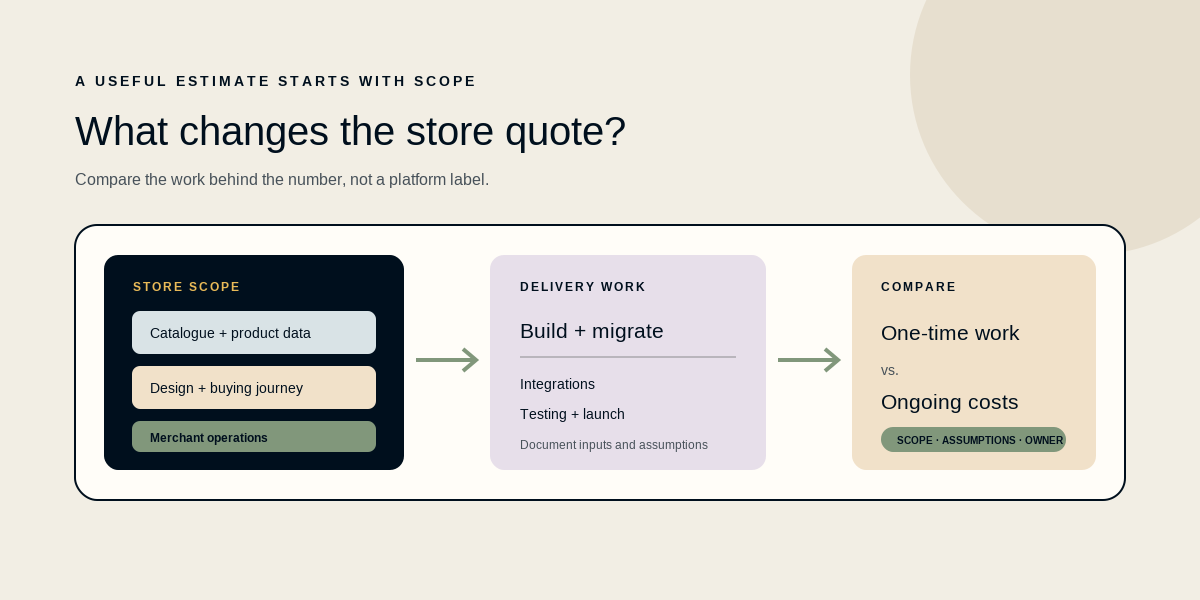
Ecommerce website cost in India depends on the store your business needs to operate, not only the platform or number of pages. Catalogue structure, content readiness, design, payment and fulfilment rules, integrations, migration and testing all affect the work. Peak Web Craft prepares custom-scoped proposals, so this guide explains how to compare the scope without publishing an unsupported price range.
TL;DR
- Describe your product, catalogue, order and merchant workflows before requesting a quote.
- Separate one-time development work from subscriptions, transaction charges and ongoing support.
- Compare equivalent deliverables, assumptions, client inputs and exclusions across proposals.
- Ask how migration, testing, account ownership and handover are included.
Start an ecommerce budget with the work to be done
Two stores with a similar page count can require different levels of planning and development. One may have a small catalogue, complete product information and a standard purchase journey. Another may need complex options, migrated content, multiple fulfilment rules, enquiry-led products or connections to existing business systems. A useful estimate explains the work behind the amount.
This page covers ecommerce projects across platforms and custom approaches. For a Shopify-specific breakdown of store setup and platform costs, see the separate Shopify website cost guide.
Which scope decisions can change an ecommerce quote?
| Work area | What to describe |
|---|---|
| Catalogue and product data | Number and type of products, options, bundles, product attributes, source data and who prepares it. |
| Storefront design | Page templates, design direction, responsive behaviour, product discovery and any custom interactions. |
| Content and media | Approved product descriptions, imagery, category copy, policies, image preparation and data entry responsibility. |
| Purchase or enquiry journey | Cart and checkout requirements, enquiry-only items, customer account needs, order messages and edge cases. |
| Integrations | Payment, shipping, inventory, accounting, CRM or other systems, including access, available APIs and failure handling. |
| Migration | Existing products, customers, order history, media, page URLs and which information must be retained. |
| Validation and launch | Representative product and order testing, device checks, redirects, analytics, staff training and release support. |
Provide representative examples rather than a single total. Include a straightforward product, one with options, one with unusual delivery or availability, and any item that requires a conversation before purchase. These examples help a developer understand the data and customer journey that the quote needs to cover.
Separate platform choice from development scope
A platform subscription, payment processing and paid extensions are different costs from design and development. A managed platform may cover core commerce administration while still needing theme work, catalogue preparation and integration setup. A custom approach may provide a tailored workflow but adds implementation and ongoing technical responsibilities. Compare what your team gets to operate in each case.
- Ask which tasks use built-in platform features, paid apps or custom code.
- Confirm who pays for and owns subscriptions, themes, extensions and connected services.
- Ask whether custom work remains compatible with the selected platform and how it will be maintained.
- Compare the staff workflow for updating products, stock, orders and store content.
Review the ecommerce development service scope guide when comparing storefront and merchant requirements.
Peak Web Craft's ecommerce website development service covers commerce planning and custom development needs. The Shopify service is focused on stores built within Shopify. The platform and implementation approach should follow the product and operating requirements.
Budget for ongoing and third-party costs separately
A development quote does not necessarily include the full cost of operating a store. Ask for recurring platform or hosting charges, paid tools, payment-provider fees, fulfilment services, support and planned updates to be identified separately. These charges can change by provider, plan, transaction type or business eligibility, so verify them against the current terms for the accounts your business will use.
| Cost category | Clarify |
|---|---|
| Project delivery | Which design, development, content entry, migration and testing tasks are in the build amount? |
| Platform and hosting | What recurring plan or hosting account is required, who owns it and who pays it? |
| Payments and fulfilment | Which provider fees, shipping services or merchant-account costs apply to your operating model? |
| Extensions and integrations | Which subscriptions or usage charges apply, and who renews or maintains them? |
| Support and maintenance | What updates, backups, troubleshooting or new development are included or separately scoped? |
Compare ecommerce proposals on a like-for-like basis
- Share the same catalogue examples, requirements and existing-system information with each provider.
- Ask for a deliverable list that identifies templates, integrations, migration and merchant setup.
- Mark every requirement as included, excluded, supplied by you or dependent on discovery.
- Compare quality checks, acceptance criteria, launch responsibilities and account ownership.
- List one-time project amounts separately from recurring third-party and operational costs.
- Ask how changes are handled when a product rule or integration is not yet understood.
Do not treat a low headline amount as comparable if it omits the catalogue, content or integration work your store needs. A proposal should also state which assumptions could change the estimate and how those questions will be resolved before a commitment to additional development.
Frequently asked questions
How much does an ecommerce website cost in India?
The cost depends on the store's design, catalogue, content, buying journey, integrations, migration and testing requirements. Peak Web Craft uses custom-scoped proposals rather than a fixed published package, so provide the scope and ask for a written breakdown instead of relying on an unsupported generic price range.
What affects ecommerce website development cost the most?
The main drivers are the catalogue and data, custom design and behaviour, checkout or enquiry requirements, connected systems, migration, content preparation and the testing needed for the merchant workflow.
Is Shopify website cost the same as ecommerce website cost?
Shopify is one platform option with its own plan, theme, app and implementation considerations. Ecommerce website cost can also involve other platforms or custom approaches. Compare the platform-specific operating costs separately from development work.
What ongoing expenses should I include in an online store budget?
Check the current platform or hosting plan, payment-provider terms, paid apps or extensions, fulfilment services, support and planned improvements. The applicable charges depend on the providers and accounts your business chooses.
How can I get an accurate ecommerce website quote?
Share representative product data, the customer buying or enquiry journey, existing URLs and systems, content readiness, integrations and launch requirements. Request assumptions, exclusions, acceptance checks and recurring costs in writing.