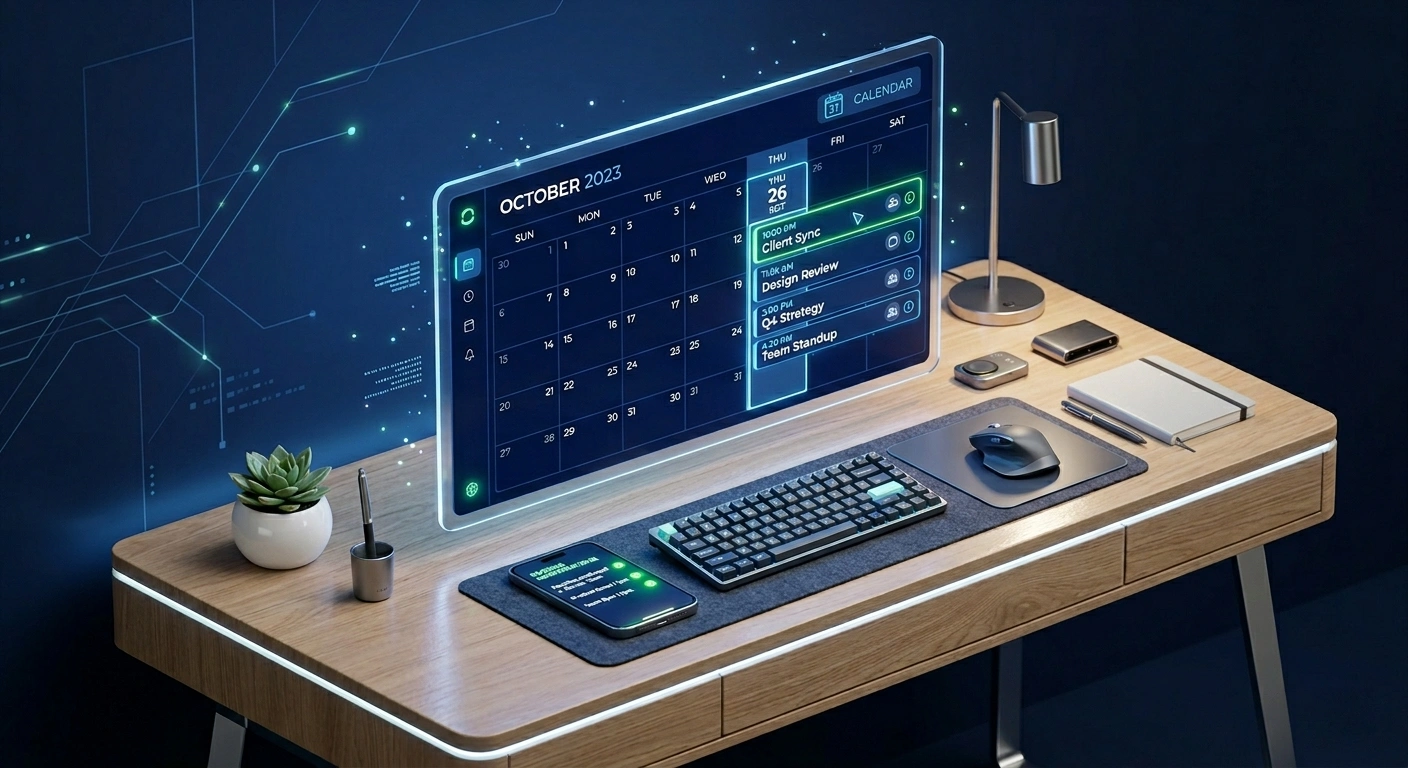
You run a service business. You are good at what you do — whether that is coaching clients, running a salon, teaching yoga, providing legal consultations, or managing a fitness studio. But somewhere between delivering excellent service and growing your business, a significant portion of your week disappears into a black hole of WhatsApp messages, back-and-forth phone calls, double-booked slots, and last-minute cancellations with no notice. This is not a discipline problem. It is a systems problem — and it has a specific solution.
A professionally built booking website does not just make it easier for clients to schedule appointments. It replaces an entire layer of manual administrative work with an automated system that runs 24 hours a day, collects client information upfront, sends reminders automatically, and deposits payments directly into your account — without you lifting a finger. In this article, we break down exactly what a booking website does, which service businesses benefit most from one, and what separates a high-quality booking system from a basic calendar link.
The Hidden Time Cost of Manual Booking
Most service business owners significantly underestimate how much time they spend on booking administration. Add up the time spent responding to WhatsApp inquiries, checking your calendar for availability, sending the slot details back, following up when the client does not confirm, resending reminders the day before, and chasing no-shows after the fact — and the total is rarely less than eight to twelve hours per week for a moderately busy practice.
That is a full working day, every week, spent on logistics that generate no revenue. It is also the most common reason service business owners feel perpetually overwhelmed despite not being at full capacity. The work of managing bookings crowds out the time available for marketing, client delivery, skill development, and strategic growth. And yet most business owners accept it as an unavoidable cost of running a service practice, because they have not seen what an alternative looks like in practice.
The best service businesses do not just deliver exceptional outcomes — they create exceptional experiences from the very first touchpoint. For most clients, that first touchpoint is booking. What does yours say about your professionalism?
Peak Web Craft — Booking Website Strategy, 2026
What a Booking Website Actually Automates
A properly built booking website is not simply an online calendar. It is an integrated client management system that handles the full pre-appointment workflow without manual intervention. Here is what a well-engineered booking website automates from end to end.
Real-Time Availability Display
Clients see your actual available slots in real time — no need to ask, no need for you to check and respond. Slots that are booked are automatically removed from view. Buffer time between appointments, blocked personal time, and holiday closures are all reflected immediately without any manual calendar management. The result is zero double-bookings and zero "let me check and get back to you" delays.
Automated Confirmation and Reminder Sequences
The moment a client books, they receive an automated confirmation with all the appointment details — service, date, time, location or video call link, and any preparation instructions you specify. A reminder is sent automatically 24 hours before the appointment, and optionally again two hours before. No-show rates for businesses using automated reminder sequences are typically 50 to 70 percent lower than for businesses relying on manual follow-up. That reduction in no-shows alone often justifies the cost of the entire website within the first month.
Upfront Payment Collection
A booking website integrated with Razorpay, Stripe, or PayU can collect a full payment or a deposit at the time of booking — before the appointment is confirmed. This single change transforms the economics of a service practice in two ways. First, it eliminates the cash-collection awkwardness at the end of the appointment. Second, it dramatically reduces no-shows, because a client who has already paid is far more likely to show up than one who has only sent a WhatsApp message promising to.
Client Information Collection
Custom intake forms built into the booking flow allow you to collect exactly the information you need before a client arrives — medical history for wellness practitioners, project brief for consultants, style preferences for salons, or fitness goals for personal trainers. When a client walks in and you already know their context, the quality of the interaction is higher from the first minute. It also eliminates the ten-minute intake process at the start of every appointment that quietly eats into your delivery time.
Rescheduling and Cancellation Handling
Clients can reschedule or cancel directly through the website, within the rules you define — for example, cancellations within 24 hours forfeit their deposit. When a slot is freed up by a cancellation, it becomes available for new bookings immediately. No phone tag. No negotiation. No manual calendar updates. The system handles it entirely.
Pro Tip: Add a brief "what to expect" section to your booking confirmation email. Clients who know exactly what will happen at the appointment arrive more prepared, more relaxed, and more satisfied with the experience — which directly improves your reviews and referral rate without any additional effort on your part.
Which Service Businesses Benefit Most
Almost every appointment-based service business benefits from a booking website — but the impact is largest for businesses with the following characteristics.
- High appointment volume. Salons, clinics, fitness studios, and tutoring centres with 15 or more appointments per week see the most dramatic time savings, because the administrative burden at this scale is nearly impossible to manage manually without a dedicated receptionist.
- Variable service types and durations. Businesses that offer multiple services of different lengths — such as a physiotherapy clinic offering 30-minute assessments and 60-minute treatments — benefit enormously from a system that automatically accounts for service duration when displaying availability.
- High no-show rates. Any business losing more than one appointment per week to no-shows is losing revenue that a deposit-collection booking system would recover almost entirely.
- Solo practitioners and small teams. When there is no dedicated administrator to manage bookings, the burden falls on the practitioner — which means it competes directly with billable delivery time. A booking website is the most cost-effective way to add administrative capacity without hiring.
- Businesses targeting clients outside their immediate geography. A yoga teacher offering online sessions, a consultant working with clients across India, or a photographer taking destination wedding inquiries from clients in other cities all benefit from a booking system that handles different time zones, sends video call links automatically, and manages the full booking flow without any phone interaction.
Booking Link vs Custom Booking Website: What Is the Actual Difference?
Many service professionals already use a scheduling tool — Calendly, Zoho Bookings, or SimplyBook.me — and consider the problem solved. These tools are genuinely useful. But they are not the same as a custom booking website, and the difference matters more than it appears on the surface.
Branding and First Impressions
A Calendly link sends your client to a Calendly-branded page. No matter how professional your service is, the experience communicates that you are using a generic free tool rather than investing in your own infrastructure. A custom booking website sits on your own domain, carries your own visual identity, and presents the booking experience as a seamless extension of your brand — which directly affects the perceived value of your service before the appointment even begins.
Integration and Customisation
Third-party scheduling tools offer a fixed set of features in a fixed configuration. A custom booking website can be built around the specific logic your business requires — multiple staff members with individual calendars, group class bookings with capacity limits, package purchases that unlock a block of future sessions, or tiered pricing based on service type. These are not edge cases for complex businesses — they are standard operational requirements that generic tools handle poorly or not at all.
SEO and Discovery
A Calendly page does not rank on Google. A custom booking website on your own domain — with proper SEO architecture targeting terms like "yoga classes Ahmedabad" or "business coach Mumbai" — can become an inbound lead generation asset that brings new clients to your booking page directly from search, without any paid advertising.
Pro Tip: If you currently have a Calendly or Zoho Bookings link, check how many clients have actually used it to book versus how many still default to WhatsApp. The ratio tells you exactly how much friction your current booking experience creates — and how much of your administrative time is being spent compensating for it.
What to Look for in a Booking Website Build
Not all booking websites are created equal. Here are the five things that separate a booking website that genuinely transforms your operations from one that simply looks functional.
- Real-time calendar sync. The booking system must sync with your existing Google Calendar or Outlook so that personal appointments, travel, and manually blocked time are automatically reflected in your availability.
- Indian payment gateway integration. Razorpay is the standard for Indian service businesses — it supports UPI, net banking, cards, and wallets, and the integration must be seamless within the booking flow rather than a redirect to a separate payment page.
- Mobile-first booking experience. The majority of your clients will book on a phone. The entire booking flow — service selection, date and time selection, intake form, and payment — must work flawlessly on a mobile screen with no friction.
- Automated communication sequences. Confirmation, reminder, and post-appointment follow-up emails should be configurable from the start, not added as an afterthought. These sequences are where a significant portion of the client experience is shaped.
- An admin dashboard that is actually usable. The business owner needs to be able to view upcoming appointments, manage client records, block availability, and adjust services without developer assistance. A booking website with a complex backend defeats much of the purpose of having one.
Wrapping Up
The hours you spend every week managing bookings manually are not a fixed cost of running a service business. They are a recoverable loss — time that a well-built booking website returns to you entirely. For most service businesses, the time savings alone make the investment worthwhile within the first two to three months.
At Peak Web Craft, our Booking Website service is built for Indian service businesses that want a professional, fully automated booking system on their own domain — integrated with Razorpay, synced with their calendar, and designed to convert visitors into confirmed appointments from the first click. If you are ready to stop managing bookings manually, let's talk. We are currently accepting new projects and typically respond within 24 hours.